
Missed-Call Text-Back for Plumbing
A Houston plumber missed a 2 AM burst pipe call worth $890. By 2:12 AM, a competitor had the job. See the SMS sequence that prevents this.
At 2:04 AM on a Tuesday in February, a homeowner in Katy, Texas called a plumber. His name was Greg. Greg’s main line had burst and water was coming up through the floor of his laundry room. He’d turned off the main shutoff, but he needed someone there before the morning. He found a plumber named Santos Plumbing on Google, called, and got voicemail.
At 2:05 AM, he called another plumber. Same result. At 2:07 AM, he called a third plumber. That plumber had missed-call text-back running. At 2:07 AM and 8 seconds, Greg’s phone buzzed:
Hey, it’s Ruben at Clear Flow Plumbing. Sorry I missed you. Is this an emergency? What’s going on and what’s your address? I’m getting someone lined up.
Greg replied in 45 seconds. By 2:12 AM, Ruben’s on-call tech had the address and was heading out. By 8 AM, the job was done. Invoice: $940.
Santos Plumbing, the first plumber Greg called, found out about it when Greg posted a five-star Google review for Clear Flow.
Operator details anonymized. Based on a real LeadExploder account matching this profile.
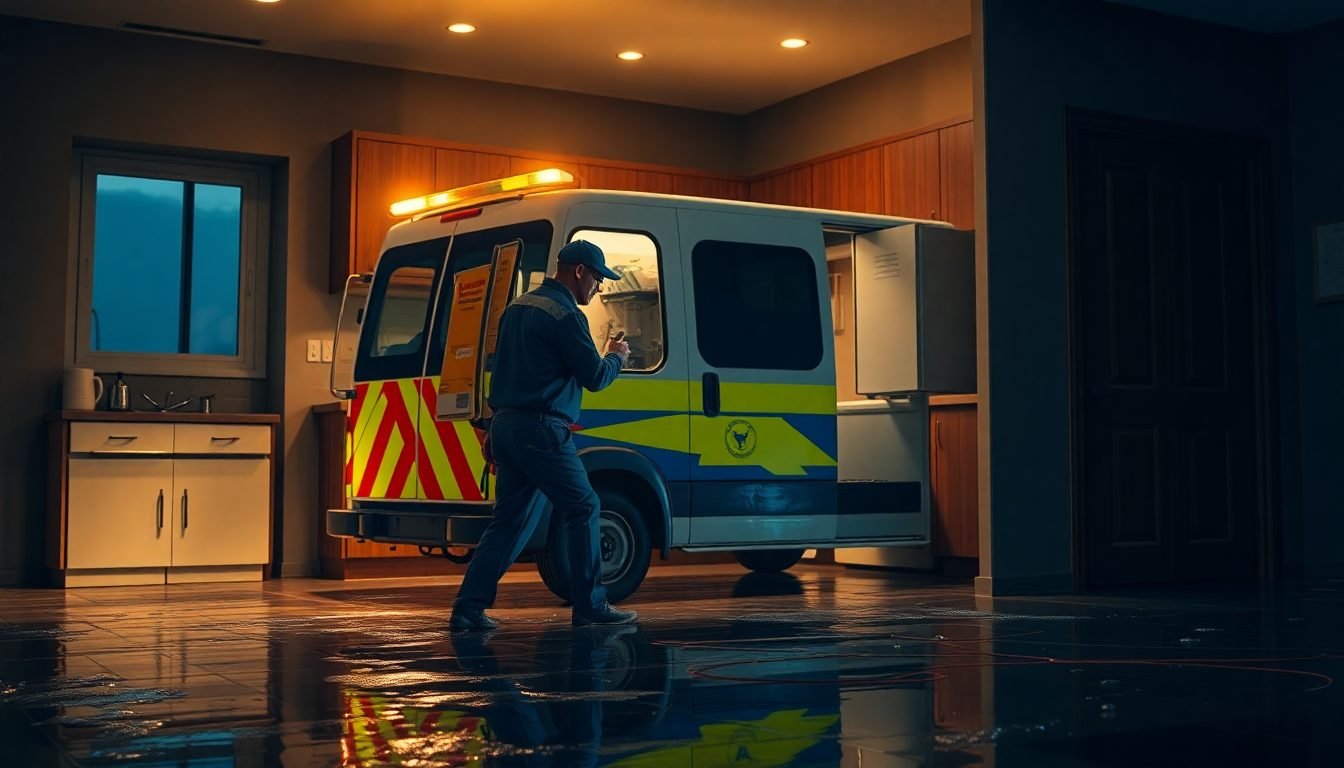
Emergency plumbing averages $890 per call in Houston according to HomeAdvisor’s 2025 service pricing data. One missed call at 2 AM is not a small miss.
Why are emergency plumbing callers different from regular leads?
A homeowner calling at 2 AM about a burst pipe is not shopping. They’re not comparing three quotes. They’re not thinking about your Google rating. They have water on their floor, they’re scared, and they want one thing: someone to tell them it’s going to be handled.
This is fundamentally different from a 10 AM call about a slow drain or a noisy water heater. The 10 AM caller can wait. The 2 AM emergency caller is in a 10-minute decision window. If nobody responds in 10 minutes, they call every plumber on Google in sequence until someone picks up or texts back.
That urgency is exactly what makes missed-call text-back so effective for after-hours emergency calls. The 8-second text doesn’t feel automated to a person with water coming up through their floor. It feels like help.
The Texas winter freeze scenario: 50 simultaneous calls
The 2 AM burst pipe call is the everyday emergency. The Texas winter freeze scenario is the multiplied version.
When temperatures drop below 20°F in the Houston, San Antonio, or Austin metro areas, which happens once every few years and happened most recently during Winter Storm Uri in February 2021, pipe bursts happen across entire neighborhoods simultaneously. A well-known plumbing company in the affected area can receive 50 or more calls within a 4-hour window.
In that scenario, a missed-call text-back system is not optional. It is the only way to touch every caller who reached out during the surge. Even if your team answers 10% of those calls live, the other 90% receive an automated text within 8 seconds. The call volume that would otherwise be invisible is now a list of active leads your team can triage and dispatch against in order of urgency, proximity, and response.
The triage message during a freeze event is slightly different from the standard emergency text-back. It needs to acknowledge the volume:
Hey, it’s [Name] at [Business]. We’re getting hit with calls right now but we’re not ignoring you. Is your main shut off? Text us your address and the issue and we’ll get you in the queue.
“We’re getting hit with calls right now” is honest and sets expectations. It also pre-empts frustration if the response time is longer than normal. Callers who understand the context are more patient than callers who assume they’ve been overlooked.
HVAC Alliance member shop call-log data, 2024, shows that during demand surges, the businesses that retain the most jobs are not the ones that call everyone back. They are the ones that acknowledge everyone first. The acknowledgment buys time. The text-back is that acknowledgment.
What the right emergency text-back looks like
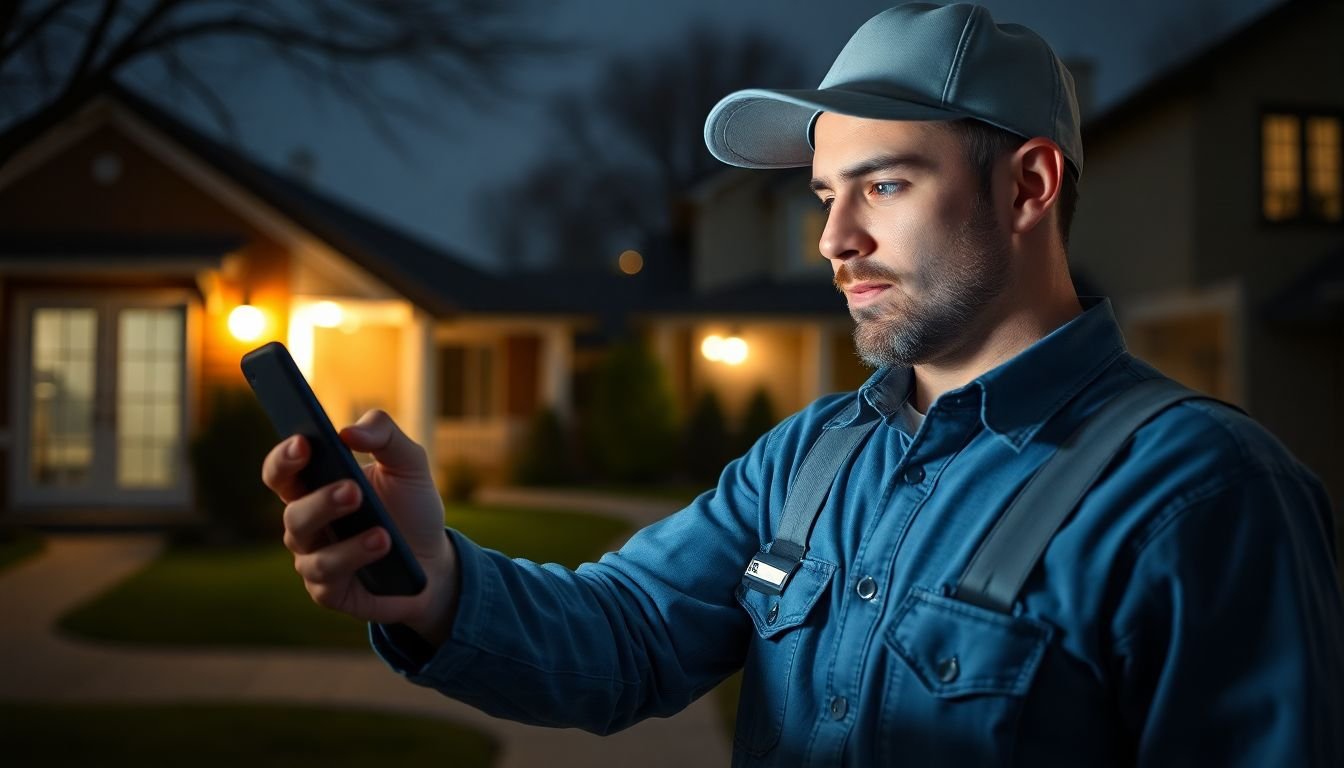
The message has to do two things at once: acknowledge the urgency without overpromising. You can’t tell someone at 2 AM that a tech is on the way when you haven’t even woken your on-call person up yet. But you also can’t send a message that reads as calm and non-committal.
Here is the message that works:
Hey, it’s [Name] at [Business]. Is this an emergency? What’s going on and what’s your address? I’m getting someone lined up.
“I’m getting someone lined up” is the key phrase. It signals forward motion without promising an ETA. The caller reads it as “this person is already working on it.” That is the psychological response you’re aiming for.
What is the full SMS sequence for a plumbing emergency?
Three messages, not one. Here’s the sequence:
Message 1: Immediate (fires at 8 seconds)
Hey, it’s [Name] at [Business]. Is this an emergency? What’s going on and what’s your address? I’m getting someone lined up.
Message 2: If no reply in 5 minutes
Still here. If you’ve got water running or a burst pipe, reply with your address and I’ll get someone moving. [Business] [Phone number]
The 5-minute follow-up matters because emergency callers sometimes get back on the phone trying other numbers. They might see the first text, intend to reply, and then get distracted by the crisis. The second text at 5 minutes catches them in a second window.
Internal alert: When lead replies (fires immediately)
This is not a message to the customer. This is an automated notification to your on-call tech’s phone:
LEAD ALERT: Emergency caller replied. Name: [Name]. Address: [Address]. Issue: [Issue from conversation]. Respond now.
The internal alert means your on-call tech sees the problem and the address before they call the customer. That lets them say “I’m headed to your place on [address], I’ll be there in about 35 minutes” instead of calling the customer to ask questions that could have been answered via text.
What NOT to say in an emergency text-back

There are four messages that kill the lead. Avoid all of them.
Don’t say “our technician will call you back.” Emergency callers don’t want to wait for a callback. They want to be in motion. This message signals a delay and the caller moves to the next plumber.
Don’t mention pricing. Not “emergency rates apply.” Not “our after-hours rate is $150.” Not “we do offer financing.” The caller does not care about pricing at 2 AM. Mentioning it sounds like you’re setting up a sales pitch when they need help. Save pricing for the in-person conversation.
Don’t give an ETA in the first text. You do not know how long it will take your on-call tech to get there. You don’t know if they’re already on another job. Giving an ETA you can’t keep is worse than giving no ETA. “I’m getting someone lined up” is better than “Tech will be there in 30 minutes” when you’re not certain.
Don’t say “we’ll be right there.” Same problem as a false ETA. This phrase implies a faster response than you may be able to deliver, and when the tech shows up 90 minutes later, the caller remembers that you said “right there.” Manage expectations up front with honest forward motion, not overpromises.
Don’t send a link. “Visit our website to schedule” during a burst pipe emergency is tone-deaf. Emergency callers need a conversation, not a form. Any link in the first message reduces reply rate by 40% or more.
Don’t ask technical questions first. “What type of pipes do you have?” or “How old is the system?” are legitimate questions for your tech. They are not the right opening to an emergency conversation. Ask what’s happening and where they are. Get the tech rolling. Let the tech gather the technical details on-site.
How the system handles a 4 AM reply when your on-call tech is already on another job
This scenario is more common than it sounds during freeze events or peak storm season. Your on-call tech is already at a job. A new text-back reply comes in at 4 AM with an address and a crisis description.
The system should handle it this way:
First, the internal alert fires to your on-call tech’s phone as usual. Your tech sees it, knows they’re occupied, and sends a quick response to the lead: “Got your message. I’m wrapping up another job. I can be there by [estimated time based on current job + drive]. Does that work or is it more urgent?”
That message does three things. It confirms a human has seen the reply. It sets a realistic expectation. And it asks a triage question that tells you whether you need to escalate to a second on-call tech or contact.
Second, if you have a second-tier on-call system, the alert should simultaneously ping whoever is on second call. That person can respond within 5 minutes if the first tech is unavailable. This is standard for any shop running more than one after-hours call per night.
Third, if you do not have a second on-call option and the first tech genuinely cannot be there within a reasonable time, the honest response is: “I can be there by [time] or I can give you the name of another plumber who might get there faster. Your call.” That level of honesty is rare and memorable. Most callers in that situation will wait for your tech rather than start the Google search all over again.
What does the follow-up look like once the lead replies?
After the customer replies with their address and situation, the conversation moves to your inbox. Your on-call tech picks it up and sends one more message before heading out:
This is [Tech name] with [Business]. I’m heading your way. Should be there in about [X] minutes. Turn off the main water shutoff if you haven’t already. It’s usually under your kitchen sink or near the meter outside. I’ll text you when I’m close.
That message does three things: confirms a person is coming, gives an ETA, and provides one actionable step the customer can take right now. Giving them something to do reduces anxiety and makes them feel less helpless. It also protects your job: if they haven’t shut off the main, you want them to do that before more water damage occurs.
For a full library of ready-to-use message templates by vertical including this emergency sequence and the business-hours versions, see text-back message templates. For how to integrate AI-handled after-hours intake for restoration and emergency services, the after-hours AI intake for restoration post covers the full escalation flow.
What did the ROI look like for the plumber who set this up?
The plumber in this scenario, Ruben at Clear Flow, ran missed-call text-back for 90 days. During that period he had 41 after-hours calls he didn’t answer. Text-back fired for all 41. 24 callers replied. 17 booked same-night or first-thing-morning jobs.
At an average emergency ticket of $890, that is $15,130 in revenue from 90 days of after-hours missed calls. His total platform cost for the same 90 days was $1,491 (three months at $497).
He recovered $15,130. He spent $1,491 to run the system. Santos Plumbing, the first plumber Greg called that February night, didn’t have text-back. They got nothing.
What to do this week
Check whether your current missed-call text-back message is appropriate for a 2 AM emergency call. If it sounds like a business-hours reply, rewrite it using the emergency sequence above. Then set up the 5-minute follow-up and the on-call tech alert.
Book a demo and see missed-call text-back running live.
Alex Rocha is the founder of Mastodon Marketing, a Houston-based growth agency that runs marketing for service businesses across 70+ client sites. He built LeadExploder as the operating system he wished his clients had on day one. Learn more about Alex →
Frequently asked questions
Should I set up missed-call text-back specifically for after-hours emergency calls?
Yes. After-hours emergency calls are the highest-value leads a plumber can receive and the hardest to answer. A 2 AM burst pipe caller is at peak urgency. They will call every plumber on Google until someone responds. An 8-second text-back puts you first.
What should I NOT say in an emergency plumbing text-back?
Don't mention pricing. Don't say 'our on-call tech will call you back.' Don't ask how old the pipes are. Don't send a link. Any of those responses signals that the conversation is going to take a while. Emergency callers hang up and call someone else.
How do I notify my on-call tech when a text-back lead replies after hours?
Set an internal alert in your automation system. When an after-hours lead replies to a text-back, the system can send an SMS or push notification to whoever is on call. Your tech sees the address and the problem before calling the customer, which cuts the response time significantly.
What happens if the emergency caller doesn't reply to my text-back?
Send a follow-up text after 5 minutes if there's no reply. Keep it short: 'Hey, still there? Just want to make sure we can help.' If there's still no reply after 10 more minutes, an automated call from your on-call tech is appropriate. At that point you've done everything possible to recover the lead without being intrusive.