AI Receptionist for Roofing: Storm Season
Dallas roofer lost 34 leads in 72 hours post-hail because crews were busy. See how AI handles storm surge, insurance, and scheduling.
Marcus Webb runs a 6-truck roofing company out of Garland, Texas. He has been in business for eleven years and knows the North Texas storm calendar better than most meteorologists. On May 14, 2025, a hail storm moved through Dallas County and dropped golf-ball-sized hail on 90,000 homes. Marcus had four crews on existing jobs when it hit. His office line rang 34 times between 3 PM and 6 PM that day. His crew answered three calls from truck cabs. The other 31 went to a voicemail box that was already full.
At $8,400 per average storm job, those 31 unanswered calls represented $260,400 in potential revenue. He recovered eight jobs over the following week by calling back everyone who left a number. The other 23 had already signed with a competitor who picked up.
Storm season is the defining moment for every roofing contractor in a hail corridor. You cannot hire your way through a 72-hour surge. Here is how an AI receptionist handles it instead.
Operator details anonymized. Based on a real LeadExploder account matching this profile.
Why does storm intake fail without AI?
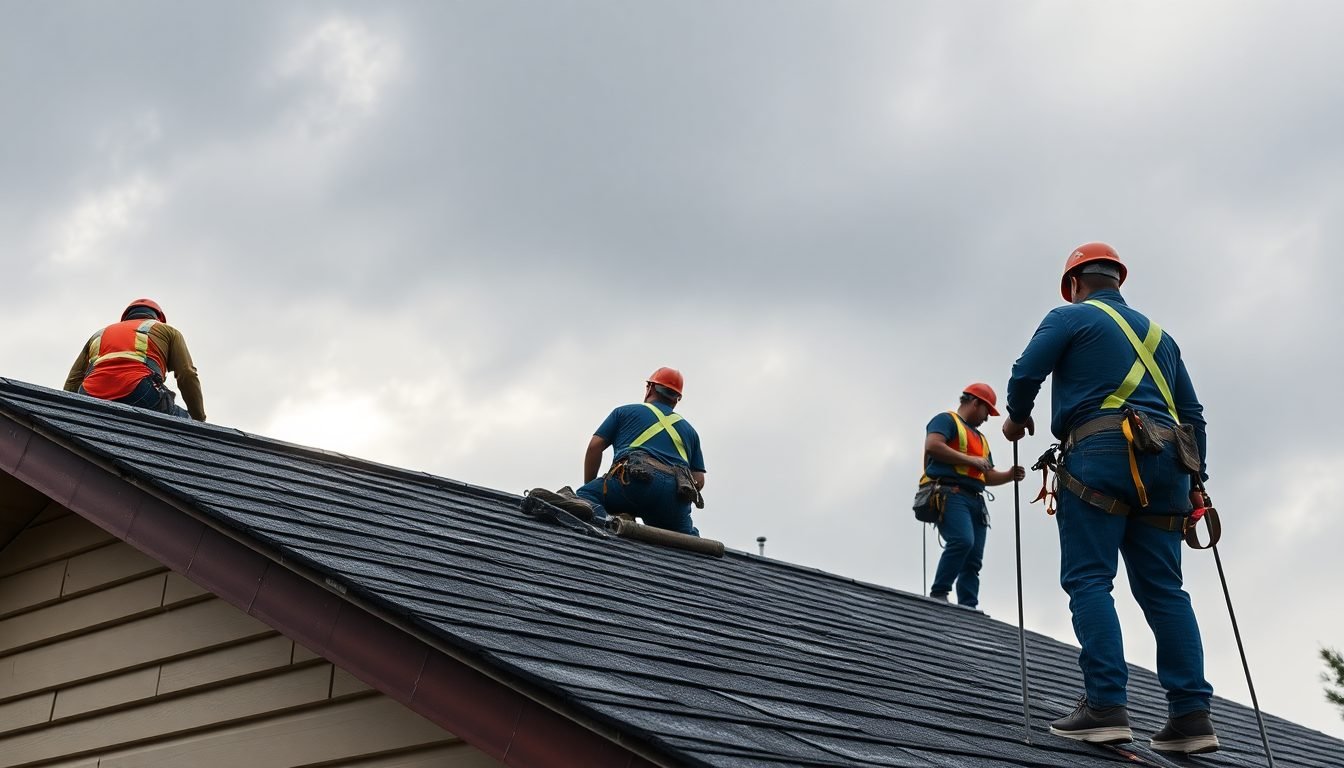
Storm calls are different from routine roofing inquiries. A homeowner who just walked outside and saw quarter-sized dents in their gutters is not a patient customer. They are calling three or four companies at once. They give the job to whoever responds first with a clear process, a firm date, and a sense of urgency.
When your crew is on roofs and your office line rings to voicemail, that homeowner is already dialing the next number on the list before your voicemail greeting finishes. The window to capture a storm lead is measured in minutes, not hours.
A human receptionist handles one call at a time. During a surge, that means every second caller hears a busy signal or hold music. An AI receptionist answers all of them simultaneously, runs the same triage script on every call, and drops a qualified record into your CRM before you even know the call came in.
What does the AI call flow look like for a storm lead?
Storm intake has a specific sequence that is different from a routine repair call. The goal is to qualify the damage, capture the address and insurance information, and lock in an inspection time. Here is the script Marcus runs:
LeadExploder AI Storm Intake Script
“Thanks for calling Marcus Webb Roofing. We’re running storm response right now. I’m going to grab a few quick details so we can get an inspector out to you fast.
First, what’s the address of the property? [Capture address]
And what kind of damage are you seeing? Roof, gutters, siding, or all three? [Capture damage type]
Do you have homeowner’s insurance that covers hail damage? [If yes] Great. What carrier are you with? [If no] No problem. We work with cash jobs too. Let me get you scheduled.
I have inspection slots open [offer next 2 available]. Which works better for you? [Confirm slot]
You’ll get a text confirmation in the next two minutes. Our inspector will call you 30 minutes before they arrive. Is this number the best way to reach you? [Confirm contact]
You’re all set. We’ll see you [date/time].”
That call runs under 90 seconds. It captures address, damage scope, insurance carrier, and a confirmed inspection slot. The CRM record is created automatically. Marcus gets a notification with the full lead summary before the call ends.
How is storm intake different from routine repair intake?

A homeowner calling about a slow leak or a damaged flashing is not in the same emotional state as someone who just had a storm roll through their neighborhood. Routine repair calls allow for a longer qualifying conversation. Storm calls do not.
The differences in approach:
Routine repair intake: Qualify first, book second. Ask about the age of the roof, whether they have had previous repairs, what they are seeing inside the home. Take 4 to 5 minutes. Offer an estimate within the week.
Storm intake: Book first, qualify during the inspection. Capture address and insurance carrier in the first 60 seconds. Offer the soonest available slot before asking anything else. The inspector does the damage assessment on site. Every extra question you ask before booking is a chance for the homeowner to hang up and call your competitor.
The AI runs two different scripts based on how the call is tagged. If the caller mentions hail, storm, wind, or insurance in the first 10 seconds, the system routes to the storm triage flow automatically. Routine calls get the standard repair intake script.
For pre-built booking scripts that cover both storm and routine intake, that post includes the full script library with multiple variations by call type.
Handling public adjuster calls: a different intake entirely
During and after a major storm event, roofing companies receive a different type of inbound call that most AI configurations are not built to handle: the public adjuster call.
A public adjuster (PA) is a licensed professional hired by the homeowner to negotiate the insurance claim on their behalf. They call roofing contractors for one of three reasons: to verify your inspection findings before submitting the claim, to coordinate the scope of work documentation they need from you, or to add your company to their referral rotation for future storm jobs.
A PA call should not go through the homeowner intake script. If the AI routes a PA to the emergency storm triage path and asks them for an inspection slot, the PA hangs up and does not call back. You have lost a referral relationship.
Configure a separate PA intake path triggered by keywords: “I’m a public adjuster,” “I’m calling about a client’s claim,” “I work with homeowners on insurance disputes.” The PA path skips the scheduling flow entirely and goes directly to: “Got it. Our estimating team works with PAs regularly. What’s the best contact for our project manager to reach you?” Capture their name, company name, phone, and the address of the property they are working. Flag it as a PA lead in your CRM.
A PA relationship that produces even one referral per month at $8,400 per job is worth $100,800 per year. It is worth a separate intake path.
Financing questions during intake: what to capture and what not to promise

After a major storm, a portion of callers ask about financing before they will commit to an inspection. The question usually sounds like: “Does your company offer payment plans?” or “Do you do 0% financing?” or “I’m not sure my insurance will cover everything.”
The AI should not answer financing questions with specific terms or promises. It does not know what carriers you work with this month, what the rate is, or whether the homeowner qualifies. A wrong answer here creates liability.
The correct AI response: “We do work with financing options for customers whose insurance does not cover the full cost. Our estimator will walk you through the options during the inspection. Let me get you on the schedule so you have that conversation in person.”
That answer is accurate, non-committal on specifics, and keeps the booking moving forward. It also signals that your company handles financing, which is a competitive differentiator in markets where many small roofing companies are cash-only.
Log financing interest in the CRM record so your estimator walks in prepared for that conversation. An estimator who leads with financing options for a caller who flagged it has a significantly higher close rate than one who waits to be asked.
Post-storm follow-up for leads that did not convert on first contact
During a storm surge, you will capture leads that book an inspection but do not sign a contract after the inspection. You will also have leads where the AI booked an inspection, the homeowner did not show up, and the slot went empty.
Both of these groups represent recoverable revenue with a structured follow-up sequence.
No-contract-after-inspection follow-up (days 1, 3, and 7):
Day 1: “Hi [Name], thanks for letting our inspector visit yesterday. Did you have any questions about what we found or the estimate we left? We can hold your inspection slot for 48 hours.” Sent via SMS.
Day 3: “Hi [Name], following up on the roof estimate. Storm repair demand in [City] is high right now and contractor availability is filling up. Let us know if you would like to move forward and we can prioritize your project.” Sent via SMS.
Day 7: “Hi [Name], last follow-up from Marcus Webb Roofing. Your estimate is still available and valid. If you are comparing quotes, we are happy to walk through ours in detail. Reply or call [number].” Sent via SMS.
No-show follow-up (same day and day 2):
Same day: “Hi [Name], we missed you for the inspection today at [time]. We can reschedule for [next available slot]. Reply to confirm.” Sent via SMS within 30 minutes of the missed appointment.
Day 2: If no response, a voice call from your office or a second SMS: “Hi [Name], wanted to make sure you got our message yesterday about rescheduling. We still have availability this week.”
For pre-written text-back templates for roofing that cover the full post-storm sequence, that post has templates you can load directly into your follow-up automation.
What does the ROI look like for one storm event?
Marcus lost 23 leads at $8,400 each. That is $193,200 in jobs he will never see. Here is what the math looks like if the AI had been running that day:
| Scenario | Calls answered | Estimated conversion (40%) | Revenue recovered |
|---|---|---|---|
| Human only (3 of 34 answered) | 3 | 1 job | $8,400 |
| AI receptionist (34 of 34 answered) | 34 | 13 jobs | $109,200 |
| Difference | 12 jobs | $100,800 |
One storm event. One afternoon. $100,800 in the difference column.
The platform costs $497 per month, or $5,964 per year. A single storm season in a hail corridor more than justifies the cost in the first surge event.
How does the system handle inspection scheduling without overbooking?
The AI books against a live calendar with capacity limits you set. If Marcus has three inspectors and each can run six inspections per day, the system caps storm bookings at 18 per day. Once Tuesday is full, callers get Wednesday. The AI communicates this clearly without apologizing or making the homeowner feel like a low priority.
During a major surge, Marcus activates a manual capacity boost that shortens each inspection from 60 minutes to 30, doubles the daily slots, and adds an early morning and late afternoon window. The AI starts offering those slots automatically once the override is set. No staff changes required.
What to do this week
Pull your missed call log from the last major storm event in your area. Multiply that number by your average ticket. If you do not have an AI receptionist running before the next cell comes through, you are handing those jobs to whoever picks up.
Book a demo and see the storm surge call flow running live.
Alex Rocha is the founder of Mastodon Marketing, a Houston-based growth agency that runs marketing for service businesses across 70+ client sites. He built LeadExploder as the operating system he wished his clients had on day one. Learn more about Alex →
Frequently asked questions
Can an AI receptionist handle insurance questions on a roofing call?
Yes, within defined limits. The AI captures the insurance carrier name, policy number if the caller has it handy, and whether the homeowner has already filed a claim. It does not give coverage advice or promise approval. That information gets passed to your estimator before the inspection so they show up prepared.
What happens when the AI gets multiple storm calls at the same time?
Unlike a single phone line or one receptionist, the AI handles unlimited simultaneous calls. If 40 homeowners call within the first hour after a storm, all 40 get answered. Each one gets the same triage script, captures their address, damage type, and insurance carrier, and books an inspection slot.
How do I set blackout hours for the AI during a storm surge so I don't overbook my crew?
You set inspection capacity caps inside the booking calendar. The AI only offers slots that have availability. Once Tuesday's inspection slots are full, it books Wednesday. You can also trigger surge mode manually, which shortens inspection slots from 60 minutes to 30 and doubles daily capacity.
What is the average ticket for a storm-related roofing job in Dallas?
A standard insurance-approved full replacement in the Dallas metro runs $8,000 to $10,000 for a 2,000 square foot home. Jobs with gutters, skylights, or secondary structures run higher. Using $8,400 as a conservative average, a single recovered lead pays for a full year of the platform in most cases.