Review velocity vs. star rating
An Austin dental practice with 4.9 stars (11 reviews) lost patients to a 4.6-star competitor with 94 reviews. Learn the math and how.
Refresh Dental in Austin had a 4.9-star Google rating from 11 reviews when their front desk coordinator noticed that a competitor two blocks over had a 4.6-star rating from 94 reviews. Both practices were booking new patients. One was booking significantly more.
The turning point came in January 2025 when Refresh Dental got access to a patient who had called both practices and chosen the competitor. When the coordinator asked why, the patient said the competitor “seemed more established.” She had not visited either practice. She had read the Google listings for about four minutes.
The competitor had a lower star rating. It had eight times as many reviews. The patient chose the busier-looking business.
Refresh Dental had an infrastructure problem, not a service problem.
Business details anonymized. Based on a real LeadExploder account matching this profile.

What does review velocity signal to Google?
Google’s local ranking algorithm treats review velocity as a proxy for relevance and business activity. A practice that had 11 reviews two years ago and has not received a new one since signals to Google’s systems that it may be less active, less relevant to current searchers, or simply not being chosen by patients who complete their journey.
A practice receiving 10 to 15 new reviews every month signals the opposite: that real patients are completing real appointments and taking the time to share feedback. Google uses this as a recency and freshness signal, the same way it weights recently published web content over older content on the same topic.
The practical result is that a business with 94 reviews accumulated over 18 months will typically outrank a business with 11 reviews accumulated over two years, even if the 11-review business has a higher average rating. Review count and velocity work together. A high rating with a stale count is a declining asset.
Google’s own documentation is explicit on this point, per Google Business Profile guidelines (support.google.com/business): “More reviews and positive ratings can improve your business’s local ranking.” The emphasis on “more” is not coincidental.
What does review count signal to prospective customers?
Prospective customers read review counts the same way they read a restaurant’s line out the door. Volume signals that other people have already made the same decision and been satisfied enough to record it publicly.
The specific number matters less than the comparison. If your nearest three competitors have 80, 65, and 110 reviews, and you have 12, prospective customers perceive you as the smallest, newest, or least-used option regardless of your star rating.
Research from consumer behavior studies consistently shows that rating differences under 0.5 stars are not statistically meaningful to most buyers once both businesses are above 4.0. A 0.3-star gap between 4.6 and 4.9 is noise. An 83-review gap is a signal that overrides the rating difference for the majority of undecided customers.
The Refresh Dental patient said the competitor “seemed more established.” She was not reading the reviews in detail. She was reading the count. 94 felt established. 11 felt new.
What does the math look like over 12 months?
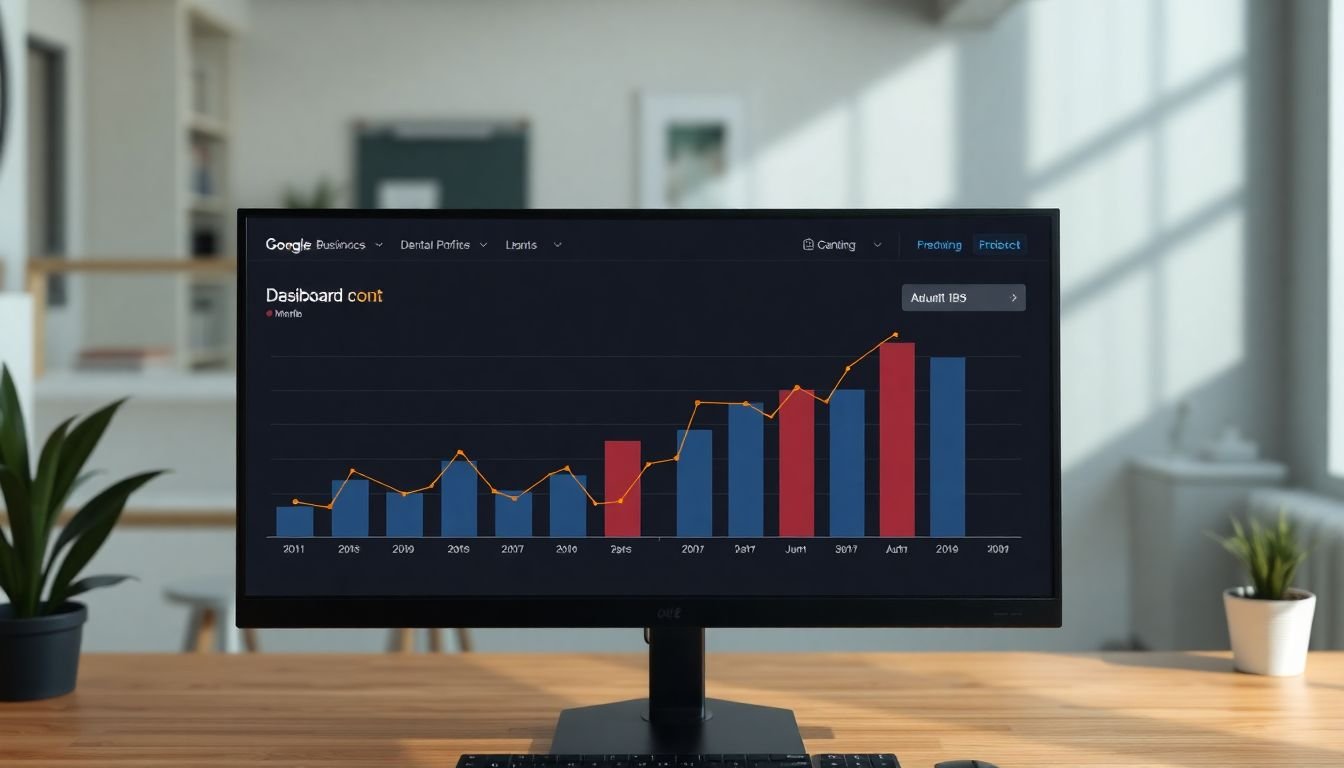
Here is the comparison between a business running a structured review request system versus one relying on organic, unsolicited reviews.
Business A (Refresh Dental at the start): 11 reviews, 4.9 stars. Adds 1 review per month organically. After 12 months: 23 reviews.
Business B (the competitor): 94 reviews, 4.6 stars. Already running a review request system adding 12 reviews per month. After 12 months: 238 reviews.
Business C (Refresh Dental after setting up a review request system at 10 new reviews per month): starts at 11 reviews in month one. After 12 months: 131 reviews, likely 4.6 to 4.8 stars as volume normalizes the average.
At the 12-month mark, Business C has 131 reviews and is competitive with Business B on volume. Business A, without the system, has 23 reviews and has lost further ground.
The math extends further. A business adding 12 reviews per month passes 144 total reviews at the 12-month mark if they started near zero. Most competitors who have not invested in systematic review acquisition will have between 20 and 50 reviews. The gap closes quickly and then inverts.
How do you build review velocity without violating Google policy?
Google’s review policies prohibit three things that operators commonly attempt: review gating (only sending review requests to customers you believe are happy), incentivizing reviews with discounts or gifts, and asking employees or friends to post reviews.
What Google’s policies explicitly permit: asking every customer for a review, sending review requests via SMS or email, using automated systems to send those requests, and following up if a customer did not respond the first time.
The compliant approach is a systematic, non-selective request to every customer after every completed service. Not just the ones who seemed pleased. Every one. The selection bias of asking only happy customers is exactly what review gating prohibits, and it also distorts your own feedback in ways that create blind spots about real service problems.
The velocity-building playbook:
Send the review request via SMS within 90 minutes of service completion for most verticals (dental, aesthetic, home services). For projects with longer delivery cycles (construction, legal matters, mortgage closings), send it within 4 hours of the milestone moment.
Include a one-tap link directly to the Google review form. Every additional step between the request and the review form cuts completion rates by roughly 30%.
Follow up once if the patient or customer did not open the first message, 48 hours later. Do not follow up more than twice total.
Rotate the message text across four to six templates to avoid SMS carriers flagging the sequence as spam.
At a 10% conversion rate on a practice seeing 200 patients per month, that is 20 new reviews per month. Over six months: 120 reviews, a rating that has been pressure-tested by real patient volume, and a local search presence that compounds month over month.
For the specific mechanics of building that sequence, see the full guide on automating review requests.
How to sustain velocity after the initial burst

Most practices and service businesses experience the same pattern: a surge of new reviews in the first 60 to 90 days after launching a review request system, followed by a plateau. The surge comes from the built-up backlog of customers who were never asked. Once that backlog is exhausted, the inflow drops to the rate driven by current appointment volume alone.
Sustaining velocity after the initial burst requires three adjustments.
First, confirm that the automated sequence is reaching every customer, not just customers in the primary system. Referrals, walk-ins, patients booked through third-party platforms, and customers who pay cash and are not entered into the primary practice management system all represent leakage. Audit the request trigger monthly to confirm all appointment types are covered.
Second, vary the message templates on a quarterly cycle. SMS carriers and Google’s own review flagging systems can identify patterns in high-volume message campaigns. Refreshing the template language every 90 days keeps the outbound sequence looking organic and avoids carrier suppression.
Third, monitor competitor velocity monthly. If a competitor is accelerating their review acquisition, your target rate needs to respond. The goal is not a fixed number of reviews per month. It is a rate that stays above your competitive set.
The long-tail approach: reaching patients from two to three years ago
The most underused source of review volume in most practices is the long-tail patient list. These are patients or customers who have been active in the last two to three years but have never left a review. They have a relationship with the business. Their continued patronage implies satisfaction. They simply have never been asked.
A re-engagement campaign targeting this group is distinct from the post-appointment automation. The message acknowledges the ongoing relationship rather than anchoring to a specific visit.
A re-engagement template:
Hi [First Name], we have really appreciated having you as a patient over the years. If you have ever had a positive experience with our team and have not yet shared a Google review, we would genuinely appreciate it. Here is the direct link if you have 60 seconds: [link]. Thank you! [Practice Name]
This message converts at lower rates than the post-appointment sequence, typically 4% to 7%, but the audience is larger. A practice with 800 patients in the last 24 months who have never left a review can expect 32 to 56 additional reviews from a single well-executed re-engagement campaign. Run it once per patient. Do not repeat it if they do not respond.
How Google weights review recency versus total count for local ranking
Total review count and ongoing velocity are not interchangeable in Google’s local ranking model. Both matter, but they operate on different timescales.
Total count provides a baseline authority signal. A business with 200 reviews has demonstrated sustained customer volume and trust over time. That signal is durable.
Velocity provides a recency signal. Google’s algorithm weights recent reviews more heavily than older ones when assessing current relevance. A business that had 200 reviews three years ago and has not received a new one since is ranked as less currently relevant than a business with 80 reviews that received 12 of them in the last 30 days.
The practical implication: a one-time burst campaign that generates 40 reviews in a week is less valuable than a steady cadence of 8 reviews per month over five months. The burst produces a spike that Google may flag as inauthentic. The cadence produces a freshness signal that compounds over time.
This is also why the review velocity gap matters more than the total count gap when you are benchmarking against competitors. A competitor with 150 total reviews but no new reviews in the last 90 days is more vulnerable than a competitor with 60 reviews who is adding 15 per month. Track the rate, not just the number.
For handling the negative reviews that inevitably arrive as volume increases, the guide on negative review responses covers the templates and escalation workflow.
What happened to Refresh Dental?
Refresh Dental set up a review request automation in February 2025. By August 2025, they had 87 reviews at a 4.7-star average. The competitor still had the edge on total count (the competitor was at 148 by August), but Refresh Dental had closed a gap that was previously unsurmountable.
More importantly, three new patients who booked in May and June mentioned Refresh Dental’s reviews specifically. One said she had seen both practices on Google and chose Refresh Dental because “you had a lot more reviews than last time I looked.” She had checked the listing six months earlier and come back.
Review count is a compounding asset. Each new review makes the next prospective patient more likely to choose you, which eventually generates more reviews. The businesses that start building velocity early own that advantage for years. The ones that wait are always catching up.
What to do this week
Check your review count against your three nearest Google competitors. Search your service category and city, pull the top three results, and note their review counts and how recently their last review arrived.
If any competitor has more than twice your review count, you are losing business to the volume gap regardless of your star rating.
Set up a review request sequence that goes out to every customer within 90 minutes of service completion. If you do not have that infrastructure, that is exactly what a demo will show you.
Book a demo and see the review automation running live.
Alex Rocha is the founder of Mastodon Marketing, a Houston-based growth agency that runs marketing for service businesses across 70+ client sites. He built LeadExploder as the operating system he wished his clients had on day one. Learn more about Alex →
Frequently asked questions
Does Google rank businesses higher if they have more reviews?
Review count and review velocity (how frequently new reviews arrive) are confirmed factors in Google's local ranking algorithm. Google's own documentation states that 'more reviews and positive ratings can improve your business's local ranking.' A business consistently receiving new reviews signals to Google that it is active, relevant, and trusted by recent customers. A profile with 12 reviews from two years ago signals the opposite.
Is a 4.6-star rating with 94 reviews better than a 4.9-star rating with 12 reviews?
For most prospective customers, yes. Research on consumer behavior consistently shows that review count carries more weight than minor rating differences once a business is above roughly 4.0 stars. A 0.3-star difference is within the range most people dismiss as noise. A 82-review difference signals that one business is significantly more established and trusted. The 94-review business also likely ranks higher in local search.
How many new reviews per month does a business need to stay competitive?
It depends on your market and how aggressive your competitors are. A minimum baseline for most local service businesses is 8 to 12 new reviews per month. If your nearest competitor is adding 20 or more per month and you are adding 2, you are losing ground regardless of your current rating. Track competitor review velocity monthly and set your target above theirs.
Does Google penalize businesses that get too many reviews at once?
Google can flag sudden spikes in review volume as potentially inauthentic, especially if many reviews arrive on the same day from accounts with no history. A consistent, organic cadence of reviews arriving across multiple days and weeks is far safer than a burst campaign. Automated review request systems spread requests across your actual customer flow, which produces a natural distribution that does not trigger spam filters.