
Immigration Intake: Multi-Language Workflows
A Houston immigration attorney lost Spanish-speaking callers after hours. Bilingual AI intake increased after-hours capture 3x. See how it works.
Sofia runs a solo immigration practice out of Gulfton in southwest Houston, one of the most linguistically diverse neighborhoods in the country. Her clients come from El Salvador, Honduras, Guatemala, Mexico, and a dozen other countries. Roughly 80% speak Spanish as a primary language.
For the first two years of her practice, her intake was entirely in English. She returned calls during business hours, did consults in Spanish, and handled the actual legal work beautifully. But her phone intake was an English-only system. A caller who reached voicemail after 6 PM could not explain their situation in Spanish. They left no message, or a confused one, and usually found another firm by the next morning.
After switching to bilingual AI intake, Sofia’s after-hours case capture tripled in the first 60 days. The same cases were calling. The system was finally answering them.
Case details anonymized. Based on a real LeadExploder law firm account matching this profile.

How does bilingual AI intake actually work?
The first decision in designing a bilingual intake flow is language selection: do you auto-detect the language from the caller’s first words, or do you offer a selection prompt?
Both approaches work. Auto-detection is faster and feels more seamless for fluent callers. But it fails predictably in two situations: callers who code-switch (mixing English and Spanish in the same sentence, common in second-generation speakers), and callers whose first words are a proper name or a greeting that doesn’t clearly signal language. A caller who opens with “um, hello, habla” leaves the system with ambiguous data.
Client selection is the more reliable method for an immigration practice serving a first-generation community:
“Thank you for calling [Firm Name]. For English, press 1 or say ‘English.’ Para continuar en español, oprima 2 o diga ‘español.’”
Once the language is selected, every subsequent prompt, every response, and every SMS the system sends is in that language. The intake summary delivered to the attorney is in English (for consistent case management), with a note at the top indicating the intake was conducted in Spanish.
What is the Spanish-language intake opener?
The opener for a Spanish-language immigration intake needs to accomplish the same thing the English opener does: establish that the caller has reached a professional firm that takes their situation seriously, and move them into a structured conversation.
A specific version that has performed well in practice:
“Gracias por llamar a [Nombre del Bufete]. Estamos aquí para ayudarle. Voy a hacerle algunas preguntas para entender su situación y conectarle con [la Dra./el Dr. / la abogada/el abogado] correcta. Toda la información que comparta es confidencial. Empecemos: ¿Puede decirme su nombre completo, por favor?”
That opener does four things. It thanks the caller. It establishes that this is a professional environment where their information is confidential (a significant concern for many immigration clients). It sets expectations that a structured conversation follows. And it moves immediately to the first data field.
Confidentiality language is more important in immigration intake than in almost any other practice area. Many immigration clients are undocumented or have uncertain status, and they need to hear clearly that the information they share is protected before they will give it accurately.
How does the system handle a mid-call language switch?
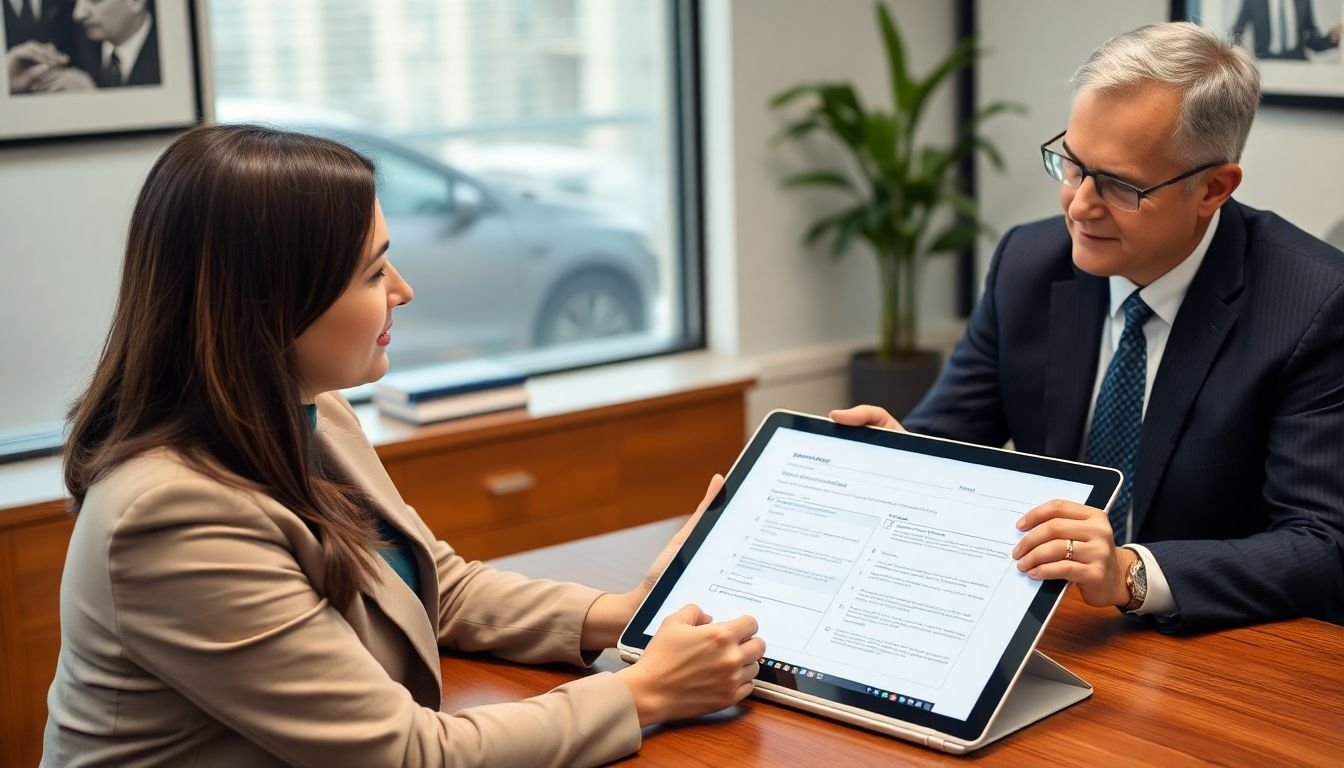
One of the most common real-world intake challenges in a bilingual practice is the caller who begins in English and switches to Spanish, or vice versa. This happens for several reasons. A second-generation caller may start in English because they expect the system to be English-only, then switch to Spanish once they realize they can. A caller in distress may revert to their primary language when the conversation gets more specific or emotionally intense.
The intake system handles this through a simple re-prompt rather than forcing the caller to restart. If the system detects a language shift mid-conversation (based on a consecutive series of words in the other language), it offers a language confirmation:
“Parece que prefiere continuar en español. ¿Quiere que cambiemos al español ahora? / It sounds like you may prefer Spanish. Would you like to switch now?”
If the caller confirms, the system switches and resumes from the last confirmed data point. Nothing collected before the switch is lost. The attorney’s intake summary notes the language switch and records both the English-language and Spanish-language portions with their respective timestamps.
This matters for firms in Gulfton, the East End, or any Houston neighborhood with a significant mixed-generation immigrant population. Callers should not be penalized for how they naturally communicate. The system adapts to the caller, not the other way around. Proper handling of bilingual callers also supports compliance with client communication obligations under the Texas Disciplinary Rules of Professional Conduct, Rule 1.03, which requires attorneys to keep clients reasonably informed and explain matters sufficiently for the client to make informed decisions.
The English-to-Spanish handoff script
When a caller selects Spanish after beginning in English, or when the attorney’s staff is handing a live call to a bilingual AI intake system, the handoff script matters. A clumsy handoff signals disorganization and erodes caller confidence.
The specific handoff script:
English: “Thank you for your patience. I’m going to connect you with our intake system, which will continue this conversation in Spanish. Everything you share is confidential. You’ll receive a text confirmation at the number you provided. One moment.”
Spanish (system pickup): “Bienvenido a [Nombre del Bufete]. Continuamos su consulta en español. Toda la información que comparta es confidencial y segura. Para empezar, ¿puede confirmar su nombre completo?”
The Spanish pickup resumes from whatever data was already captured in English. The caller does not repeat themselves. Their name, phone number, and the initial reason for calling carry forward. The system picks up at the next uncaptured field.
What fields are required for DACA renewals versus family petitions versus asylum?

Not all immigration cases require the same intake data. The system branches based on the caller’s petition type to collect only the fields that are relevant to that matter, avoiding a bloated intake that exhausts the caller before they reach the consult.
DACA renewal intake fields:
- DACA recipient since: (original grant date)
- Current DACA expiration date
- Employment Authorization Document number and expiration
- Any criminal charges or convictions since last renewal (including arrests not resulting in conviction)
- Any travel outside the United States since last approval
- Current address and continuous U.S. residence documentation
Family petition intake fields:
- Relationship of the petitioner to the caller (USC parent, USC spouse, LPR parent, USC sibling, etc.)
- Petitioner’s citizenship or status
- Whether a petition has already been filed (if yes, priority date)
- Caller’s country of birth for chargeability purposes
- Any prior visa denials, removal orders, or entries without inspection
- Whether the caller is currently in the United States or abroad
Asylum intake fields:
- Country of origin
- Nature of the persecution feared or experienced (general category: political opinion, religion, nationality, race, membership in a particular social group)
- Whether the caller has been to a third country before entering the United States (safe third country bar issue)
- Date of most recent entry into the United States
- Whether the caller has previously applied for asylum or had a credible fear interview
- Whether there is a one-year filing deadline concern (asylum must be filed within one year of arrival, with limited exceptions)
Each branch is a shorter conversation than a full immigration intake would be, because the system only asks what that specific case type requires. The attorney receives a pre-consult summary that is specific to the matter, not a generic form with mostly blank fields. For immigration firms also handling family law intake matters, the same branching approach applies: the intake system routes to case-specific questions based on the initial reason for the call.
Removal order intake: what to capture and why it escalates immediately
A caller who mentions a prior removal order is in a different situation than a caller exploring their immigration options for the first time. A removal order is a federal order that carries active legal consequences, including reinstatement of removal if the person is apprehended, ineligibility for most relief categories, and potentially an expedited removal process.
When the caller discloses a prior removal order, the system does not continue the standard intake flow. It flags the call for immediate attorney review and captures a specific set of fields:
- When was the removal order issued?
- Was the removal order entered in absentia (while the caller was not present at the hearing)?
- Has the caller ever physically left and re-entered the United States since the order was issued?
- Is the caller currently in removal proceedings, or does he or she believe ICE or DHS is aware of their location?
- What was the basis for the original removal order?
These fields matter because removal order cases have extremely time-sensitive options. A motion to reopen an in absentia removal order has strict deadlines. A person who re-entered after a removal order may have triggered a 10-year or permanent bar that affects which relief is available. An attorney who walks into a consult knowing these facts can have a substantive conversation. An attorney who discovers the removal order for the first time at the consult loses the entire first meeting to fact-gathering.
The intake summary for a removal order case is flagged at the top of the attorney’s morning report with a priority designation. The attorney or a senior paralegal contacts that caller before other after-hours inquiries because the legal clock is often running. Conflict screening at intake is also triggered immediately when a removal order is disclosed, since prior representation of any co-respondent or family member in connected proceedings must be cleared before the consult can proceed.
What does the after-hours capture math look like?
Sofia was getting an average of 18 inbound contacts per month before the bilingual system. Roughly 8 of those came after 6 PM. Of those 8, she was recovering about 2 because the other 6 either left no message or left a message she could not interpret.
After the bilingual intake system, her after-hours capture went from 2 to 6 per month (the 3x increase). At an average case value of $2,800 for a standard immigration matter (adjustment of status, petition, renewal), that is an additional $11,200 per month in captured case value, or roughly $134,000 per year, from cases that were already calling but couldn’t communicate through the intake bottleneck. (Source: LeadExploder law firm account data, 2024-2025.)
That number does not include referrals. Immigration clients who feel they were helped competently and respectfully in their own language refer family members, coworkers, and community members at a high rate. The long-term case value of a single captured after-hours immigration caller is well above the initial engagement.
What to do this week
If 30% or more of your client base speaks a language other than English as their primary language, run this test. Look at your last 30 days of missed calls that arrived after 6 PM. For any voicemail left in a language other than English, count how many of those callers you successfully reached the next day. That is your bilingual after-hours recovery rate.
If it is below 50%, you have a structural gap that bilingual intake closes completely.
Book a demo and see the intake flow running live.
Alex Rocha is the founder of Mastodon Marketing, a Houston-based growth agency that runs marketing for service businesses across 70+ client sites. He built LeadExploder as the operating system he wished his clients had on day one. Learn more about Alex →
Frequently asked questions
How does bilingual AI intake detect which language to use?
The system offers both options at the start of the call or chat: 'For English, press 1 or say English. Para continuar en español, oprima 2 o diga español.' Client selection is the more reliable method. Language auto-detection from first-word input is available but can misclassify callers who are code-switching or whose first words are proper nouns. Client-selected language reduces friction and avoids the misclassification problem entirely.
What must immigration intake capture that other practice areas do not?
Immigration intake must capture: current visa status and visa expiration date, country of origin and country of citizenship (which may differ), port of entry and entry date, prior removal orders or immigration court history, petition type or relief category the caller is seeking, and whether the caller has any pending proceedings. These fields are specific to immigration and affect both case evaluation and conflict of interest analysis.
What questions is the AI absolutely prohibited from answering in an immigration intake?
The AI cannot answer specific legal questions about the caller's immigration situation, cannot advise whether a particular visa or relief category is available to the caller based on their facts, and cannot give any opinion about the merits of a potential case. These are legal advice questions that require attorney judgment. The system is specifically designed to collect facts and book the consult, not to provide any legal analysis.
How does bilingual intake affect after-hours case capture?
After-hours case capture depends on whether the caller can successfully communicate their situation. For a Spanish-primary caller reaching an English-only voicemail at 10 PM, the probability of leaving a useful message is very low. Bilingual AI intake removes that barrier entirely. The caller can describe their situation fully in Spanish, the intake captures all required fields, and the attorney receives a complete intake summary in the morning.