AI Phone Answering Recovers Missed Calls
Atlanta restoration found 68% of calls went unanswered. See the exact math on how AI turns missed calls into booked jobs with real numbers.
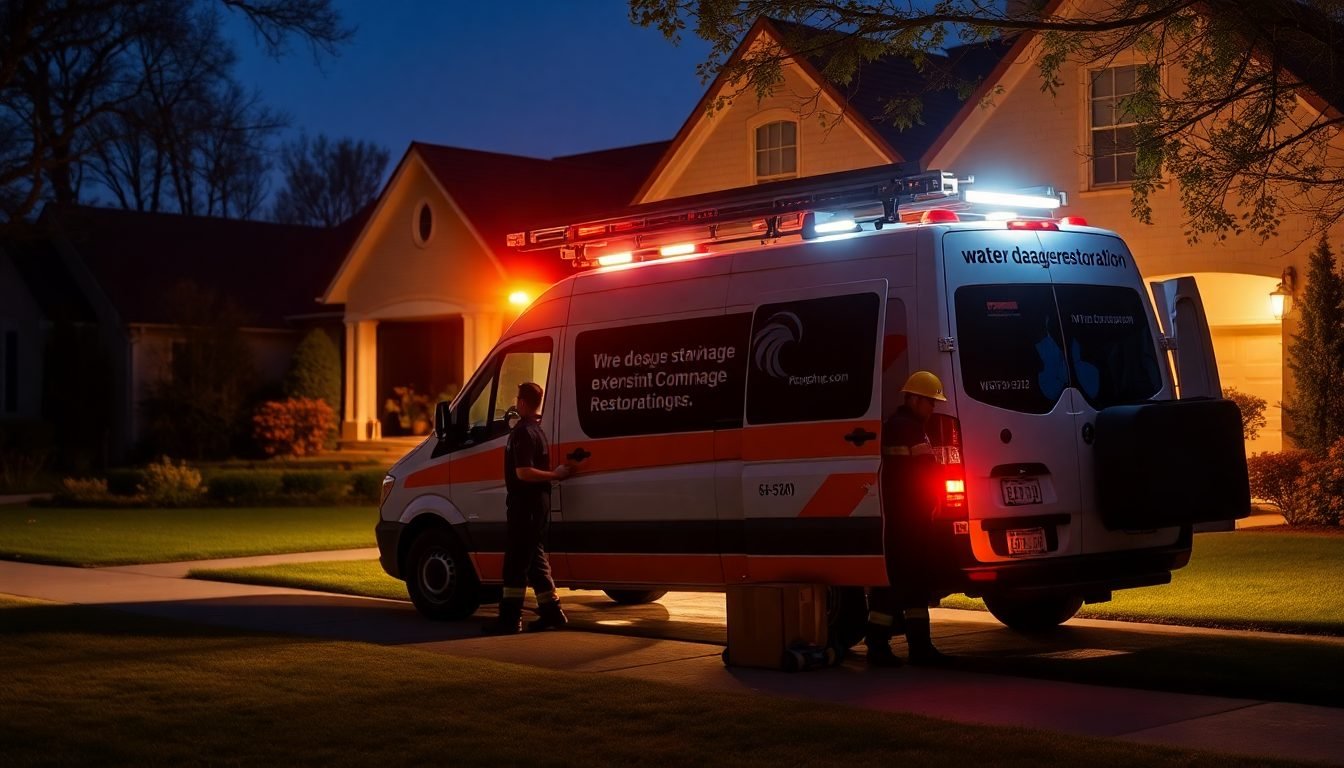
David Park owns a water damage and restoration company in Atlanta’s Buckhead corridor. He’s been in business for seven years, has a crew of eight, and always believed his office team was on top of inbound calls. In January 2025, he installed a call tracking system as part of a marketing audit. He let it run for 60 days before looking at the data.
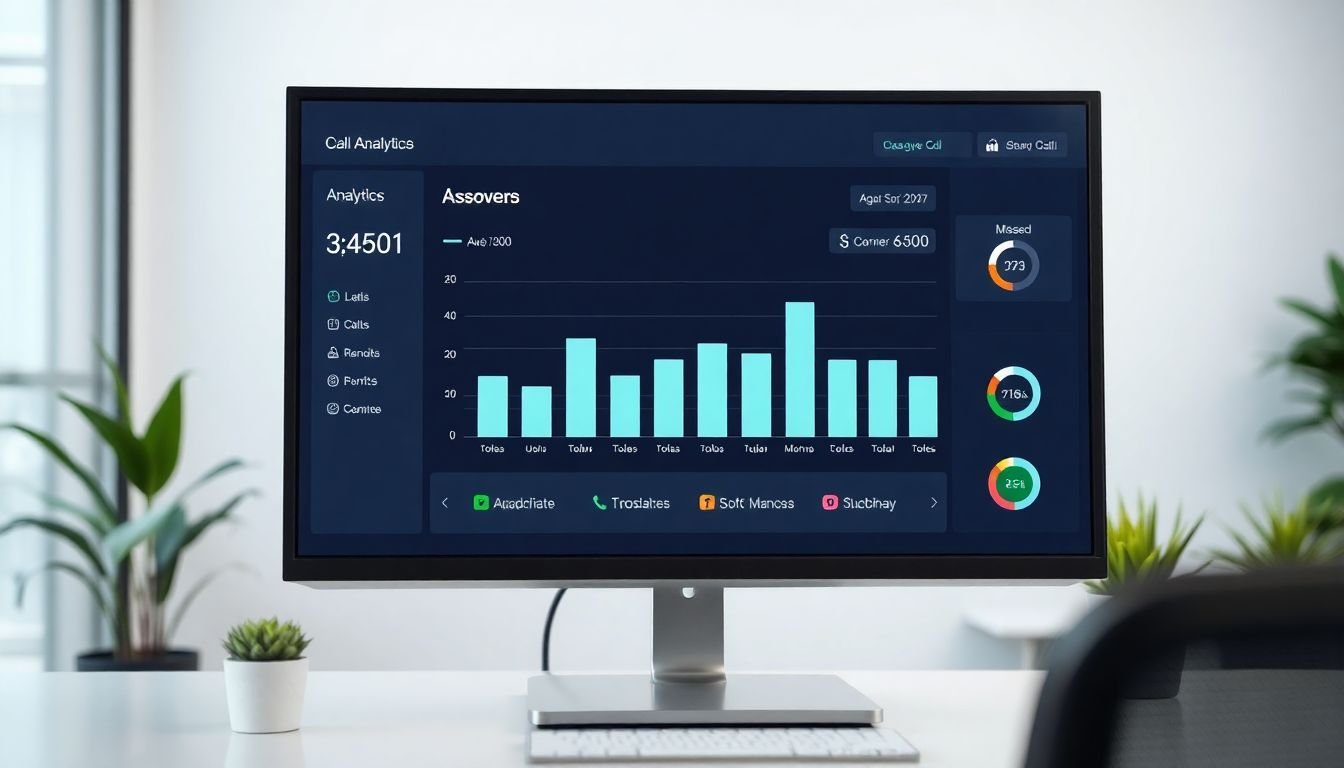
What he found: 68% of his inbound calls had gone unanswered over those two months. His team was answering roughly one in three calls. The other two were going to voicemail or ringing out entirely.
David did not panic. He did the math.
Operator details anonymized. Based on a real LeadExploder account matching this profile.

How does a restoration company end up answering only 32% of its calls?
The operational explanation is straightforward. Restoration companies deal with volume spikes during weather events. In Atlanta, that means freeze events in winter, storm seasons in spring, and humidity-related mold calls through summer. During a spike, every person in the office is on a call, on-site, or coordinating a crew. The phones ring and there is nobody to answer them.
The second factor is call clustering. Restoration calls do not space themselves out. They arrive in bursts after the triggering event. A pipe freezes and bursts at 6 AM on a Monday. By 8 AM, there are 14 people in the same zip code with the same problem calling the same three companies. The first company to answer the phone gets the job. The caller does not wait.
David’s 60-day audit covered a period that included one freeze event and two storm events. During those four combined days, his unanswered rate was 84%.
What does 68% unanswered actually mean in dollars?
David ran the math and it was not comfortable.
His inbound call volume averaged 130 calls per month over the 60-day window. At 68% unanswered, that is 88 calls per month going unrecovered.
His average water damage job: $4,200.
His historical booking rate on live answered calls: 38%.
Working through the calculation:
- 88 missed calls per month
- If AI text-back recovers the caller into a conversation: roughly 60% engage with the follow-up text (based on HVAC Alliance member call-log data, 2024)
- 60% of 88 = 53 callers re-engaged
- At a 28% booking rate on those recovered conversations: 14.8 jobs per month
- At $4,200 average ticket: $62,160 per month in potential recovered revenue
Even if those numbers are optimistic by 40%, the downside case is $37,296 per month in recoverable revenue that David was leaving behind.
His AI platform cost: $397 per month.
What happens in the first 8 seconds after a missed call?
The window is shorter than most operators think. Here is what happens on the caller’s end in real time.
A restoration caller, especially one dealing with active water damage, is not in a patient mindset. They called because something is wrong right now. When the phone rings out or hits voicemail, they look at their screen, see the call is over, and immediately reach for the next option. That next option is the second or third result on their Google search, which is already open in the other tab.
Eight seconds is approximately how long it takes a caller to put their phone down after a missed call before they start the next action. An AI text-back that fires within 8 seconds arrives while the phone is still in their hand. They just experienced a missed call and their screen lights up with a text from the company they called.
The psychological effect is significant. The caller did not experience abandonment. They experienced a company that responded immediately, just via text instead of voice. The conversation has already resumed before the competitor even enters the picture.
The message that works is short and specific:
Hey, this is [Company Name] in Atlanta. Missed your call — sorry about that. Are you dealing with water damage or flooding right now? We can usually have someone out within 2 hours. What’s your address? [First Name]
That message does three things. It confirms the company name so the caller knows who they are talking to. It anticipates the most likely reason for the call (water damage) so the caller does not have to re-explain. It sets a response time (2 hours) that creates an immediate competitive advantage over a voicemail that will not be checked until morning.
Text-back recovery vs. voicemail recovery: the difference in real numbers
Not all recovery attempts are equal. A text-back recovery and a voicemail recovery operate on completely different timelines and produce completely different results.
Voicemail recovery: The caller leaves a message. Your team checks voicemail at 8 AM or when they have a moment between jobs. The callback happens 30 minutes to 4 hours after the missed call. By that point, Hiya’s 2024 State of the Call Report (hiya.com) shows that 70% of high-urgency service callers have already booked with another provider. Your callback reaches someone who either has already moved on or, in the best case, is still comparing options. Voicemail recovery booking rates in the restoration vertical run 8% to 12%.
AI text-back recovery: The text fires within 8 seconds of the missed call. The caller is still holding their phone. Engagement rates on an 8-second text-back for service businesses run 55% to 65% (HVAC Alliance member call-log data, 2024). Of those who engage, 25% to 32% book. That gap, from 8% booking on voicemail recovery to 28% booking on text-back recovery, is the economic argument for AI in a single data point.
The key variable is response time. Every minute of delay between missed call and first recovery contact compresses the conversion rate. The 28% booking rate assumes an 8-second text-back. At 5 minutes, expect 18%. At 30 minutes, expect 9%. At 2 hours, you are at voicemail recovery territory.
How to track source attribution on recovered calls
If you are running AI phone answering alongside other lead sources (Google Local Services Ads, website contact forms, referrals), you need to know which recovered calls came from which source. Without attribution, you cannot calculate the true ROI of the AI system separately from your organic or paid channels.
The attribution setup has two parts.
First, use a dedicated tracking number for each call source. Your Google LSA gets one number. Your website gets another. Your truck magnets get a third. All of them can route through the AI, but the call log captures which number the caller dialed. This tells you whether the AI recovered a Google-sourced lead or an organic web lead. The economic value is different: a Google LSA click costs $25 to $80. A recovered Google lead is a click that already spent money. Every voicemail recovery from a paid source is double the loss.
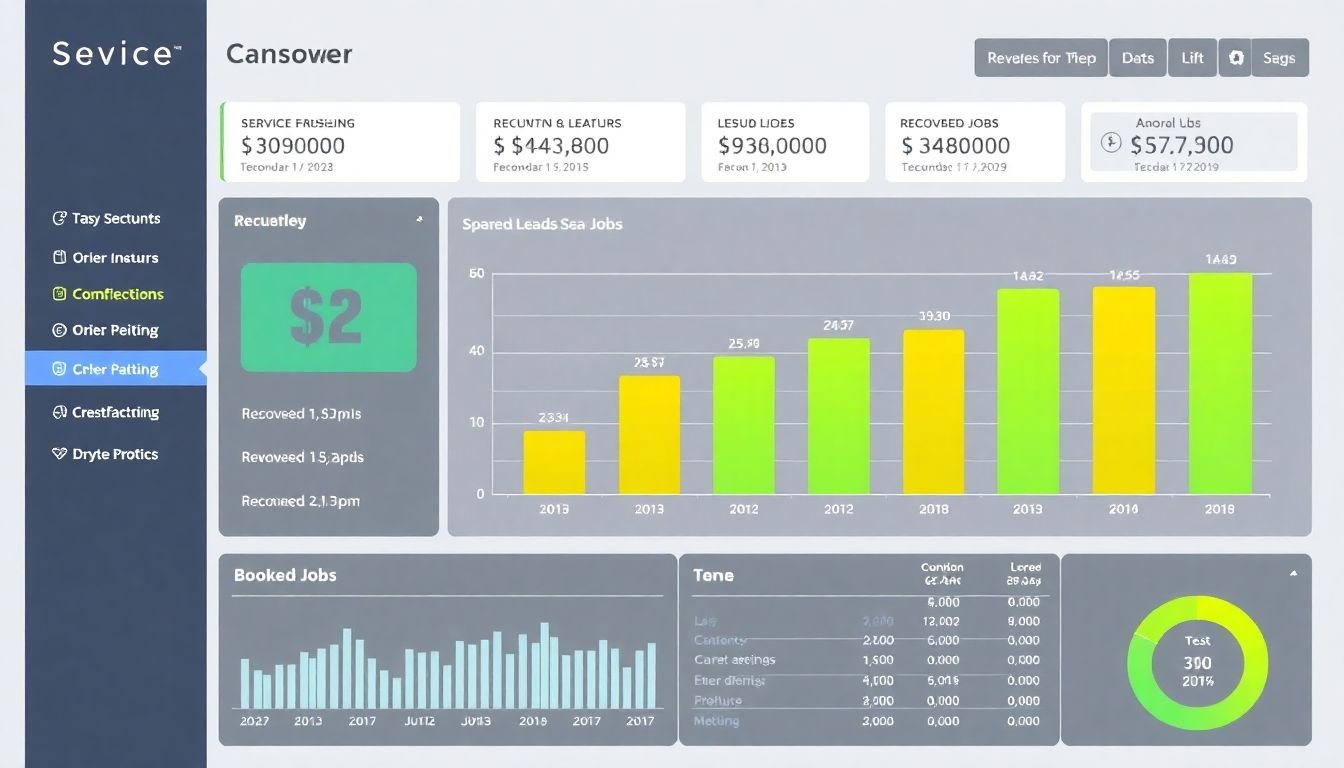
Second, tag recovered calls explicitly in your CRM. Most AI platforms append a “recovery source” field to leads generated from the text-back flow. If your platform does not do this automatically, set up a CRM automation that flags any contact created within 5 minutes of a missed call as a “recovered lead.” You can then run a monthly report on recovered leads vs. standard booked leads to compare conversion rates and ticket sizes.
For a calculated estimate of what your specific missed-call volume is worth, the missed-call text-back ROI post has a calculator you can run against your own numbers.
What the conversion data looks like at 30 days vs. 90 days
The 30-day numbers and the 90-day numbers tell different stories, and most operators only look at 30-day data before drawing conclusions.
At 30 days: The system is still learning your call patterns. Your AI configuration may still have rough edges, particularly in the edge cases (callers who describe damage in unusual ways, callers who ask for a specific technician by name, callers who speak primarily Spanish). Expect booking rates in the 20% to 24% range as the configuration gets refined.
At 90 days: With two rounds of configuration refinement behind you, the booking rate stabilizes. The 25% to 32% range cited earlier applies to a properly tuned 90-day-old system. Just as importantly, 90 days gives you enough data to see which source attributions are performing, which call types have the highest conversion rates, and where the biggest remaining gap is (usually late-night calls or weekend calls where emergency triage is most critical).
David’s numbers at 90 days showed a stabilization around 15 booked jobs per month from recovered calls. That number did not move significantly after month three. The big gains came in months one and two as the configuration tightened.
For a framework on how this compares to running human receptionists on the same volume, the voice AI vs. human ROI comparison lays out the full staffing cost model. For a deeper look at what AI voice agents do beyond text-back, that primer covers the full scope.
What does David’s numbers look like after 90 days on AI?
David’s operation after installing AI phone answering and text-back:
- Unanswered calls per month: still approximately 88 (he did not add staff)
- Callers who responded to the AI text-back: 54 per month (61%)
- Booked jobs from AI-recovered conversations: 15 per month
- Average ticket on those jobs: $4,200
- Monthly revenue from recovered calls: $63,000
- Platform cost: $397 per month
Net new monthly revenue after platform cost: $62,603.
The ROI math at 90 days made the decision to keep the system permanent an obvious one. But the specific number that David cites is not the revenue. It is the call volume. He ran the same 60-day audit after 90 days on AI and found his effective answer rate was 94%, because the AI was picking up the calls his team could not.
His team’s answer rate had not changed. His coverage rate had.
How complex is setup?
This is a fair question to ask before committing to any platform. The honest answer: configuring an AI phone answering system for a restoration company takes 7 to 14 days done properly. The complexity is not the technology. It is the call script work.
You need to define, before configuration begins: what call types exist, what the qualifying questions are for each, what the handoff protocol is for calls the AI cannot resolve, what the escalation trigger phrases are for after-hours emergencies, and what data fields need to populate in your CRM at call end.
If you hand a vendor a blank slate and ask them to configure the system, the output will be generic and will not match how your team actually operates. If you come in with a one-page document that maps call type to qualifying questions to next action, the configuration goes faster and the launch is cleaner.
The setup complexity is front-loaded. After the first 30 days, the system operates without ongoing configuration work unless your call types or business processes change.
What about calls that need a human judgment call?
AI phone answering is not the right tool for every call in a restoration operation. A call from an insurance adjuster trying to negotiate a scope of work needs a human. A commercial property manager calling about a multi-unit event needs a relationship-oriented conversation. A repeat client with a complaint about a previous job needs to talk to someone, not a script.
The AI’s job is to handle the volume and the after-hours calls, so your team can focus on the calls that require judgment. That is the operational model that actually works. Not AI instead of people. AI plus people, doing different things.
What to do this week
Install call tracking on your main business line if you do not already have it. Most phone carriers and CRM platforms offer this at no additional cost, or for $20 to $40 per month. Let it run for 30 days. Then pull the report and count total inbound calls vs. answered calls.
Multiply your unanswered call count by your average ticket. Multiply by 28%. That is the conservative recovery estimate with an AI system running.
Compare it to $397 per month.
Book a demo and see AI phone answering and text-back running live.
Alex Rocha is the founder of Mastodon Marketing, a Houston-based growth agency that runs marketing for service businesses across 70+ client sites. He built LeadExploder as the operating system he wished his clients had on day one. Learn more about Alex →
Frequently asked questions
What percentage of home-services calls go unanswered on average?
Data from call-log audits across home-services accounts in Atlanta, Houston, and Dallas shows an average unanswered rate of 62% to 71%. The number is higher for restoration companies, which handle high call volume during storm and freeze events when staff are at maximum capacity.
How fast does AI need to respond to a missed call to recover the lead?
Within 8 seconds is the target. At 8 seconds, the caller has not yet unlocked their phone to call the next company on their list. At 60 seconds, roughly 40% of callers have already dialed a competitor. At 5 minutes, the recovery rate drops below 10% for high-urgency service calls.
What is the booking rate on calls recovered by AI text-back?
For home-services businesses with a well-configured follow-up flow, the booking rate on AI-recovered missed calls runs 25% to 35%. This is lower than the booking rate on live answered calls (typically 45% to 55%), but the alternative is 0% from a voicemail the caller never left.
What is the average water damage restoration ticket, and how does that affect the ROI math?
The national average water damage restoration claim processed through insurance runs $3,900 to $4,500. For out-of-pocket mitigation jobs (less common), the ticket is typically $1,800 to $2,800. At $4,200 average, recovering even one additional job per month from missed calls covers most AI platform costs for the year.