
First crew on scene wins 75% of jobs. Be that crew.
Houston restoration is a foot-race economy. The water-loss call at 11:47 PM goes to whoever picks up first AND whoever rolls a truck first. Most operators lose at the first hurdle: the call goes to voicemail, the homeowner dials the next number, and by the time your office hears about it the next morning, someone else's equipment is already on the floor. LeadExploder closes the gap.
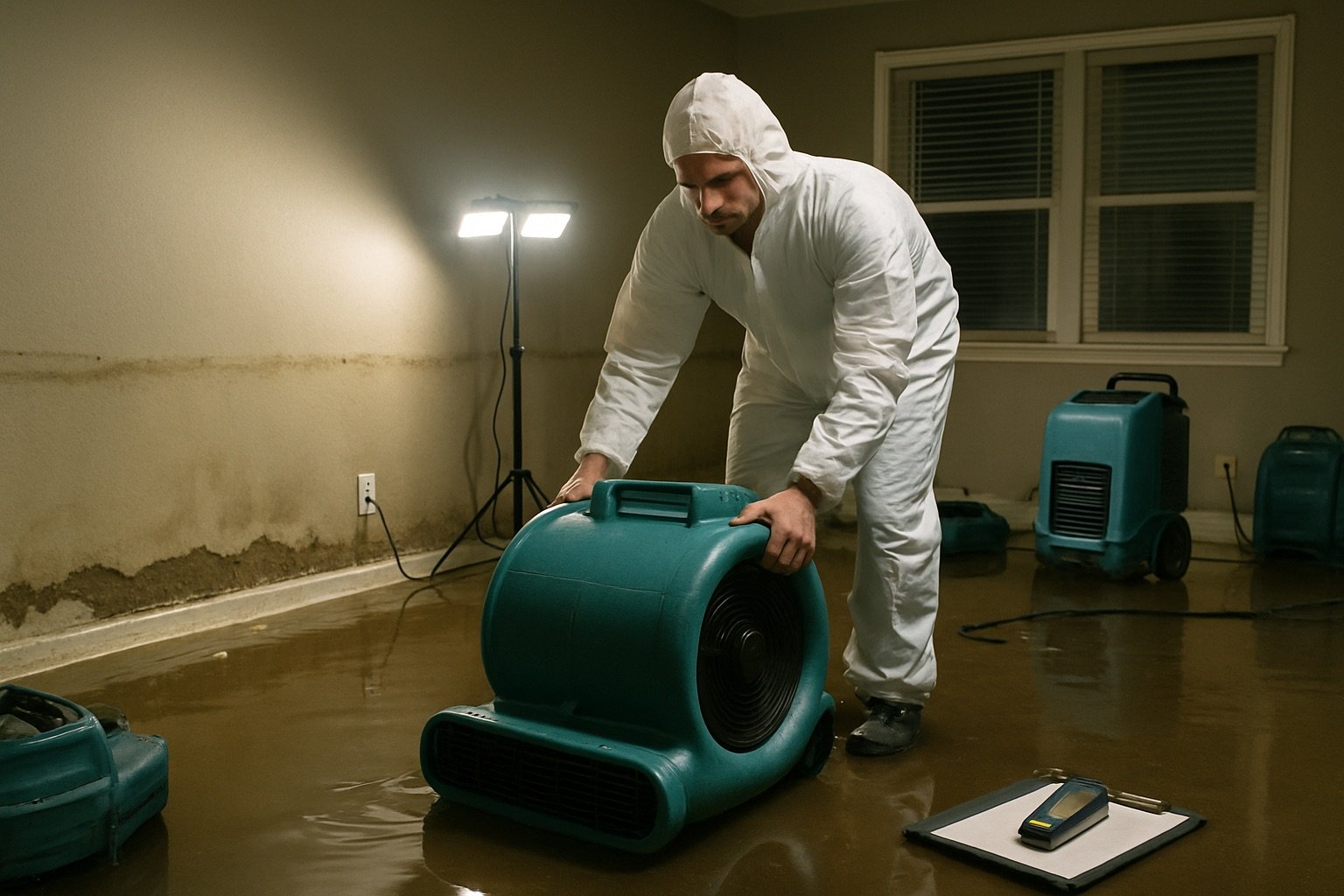
Every Houston operator lives in the shadow of Harvey.
The 2017 Hurricane Harvey water-loss surge permanently reshaped Houston restoration. 200,000+ homes flooded, FEMA paid out $13B+, and every operator who built operational capacity that month doubled or tripled the next three years. Every operator who didn't, spent the next three years getting bought.
The reshaping wasn't only about equipment fleet, it was about communication infrastructure. The shops that came out ahead were the ones who could answer the phone at 3 AM during peak crisis, deploy a crew within an hour, and keep the homeowner and the adjuster updated by text every six hours without a human being on the loop. The shops that came out behind were the ones whose office team was overwhelmed by hour eight of the surge and went dark.
Eight years after Harvey, the lesson is institutional. Houston operators know what scale they need. The question is whether they can afford the staff to deliver it, or whether they're going to let AI carry the load and keep the staff focused on the work that actually requires hands.
The midnight water-loss dispatch flow that wins the job.
This is the exact flow that runs on every emergency call. Every step exists because of a specific failure mode we've watched happen at a different restoration shop.
- 0:00, Call rings to your 24/7 line. Voice AI answers in 8 seconds with your company tone.
- 0:15, Triage script runs: loss type (water source, fire, mold), square footage affected, is the source still active, occupancy status, insurance carrier and claim number if known.
- 0:45, Address captured. System pulls the closest on-call tech by drive-time from current location.
- 1:00, On-call lead is paged via SMS + auto-call. If no acknowledgment in 90 seconds, system escalates to backup lead.
- 1:30, Tech acknowledges, ETA confirmed to homeowner via SMS with the tech's name, photo, and truck number.
- 2:00, Insurance carrier auto-notified if the carrier-direct workflow is set up (TPA programs). Matter record created with full transcript, photos requested from homeowner, IICRC checklist initialized.
- 4:00, Tech is on scene. Equipment is rolling. The homeowner has been kept calm and informed for the full four minutes. Your competitor is still being routed to voicemail.
In a market where 75% of jobs go to first arrival, every minute shaved off the dispatch chain is direct revenue. The shops that move from "9-minute average dispatch" to "4-minute average dispatch" report roughly 40% more captured jobs without changing anything else.
Adjusters are a sales channel. Manage them like one.
The dirty secret of profitable restoration shops is that 40-60% of their revenue comes from a small number of adjusters who consistently refer work. Treat those adjusters like marketing channels (because they are), and the economics get a lot easier.
- Adjuster contact records with carrier, territory, direct line, and email captured in your CRM.
- Performance dashboards showing jobs-per-adjuster-per-month, average job size, and time-to-pay by adjuster.
- Auto-tagged inbound from any matter that mentions an adjuster name or a known carrier claim number, so the right account manager owns the relationship.
- Quarterly check-in sequence for adjusters who haven't sent work in 60+ days: a personalized email from the AM with new equipment, certs, or case study attachments.
- Year-end relationship review with each top-10 adjuster, scheduled automatically, with a pre-built deck of the year's work pulled from your CRM.
IICRC-aware documentation that doesn't get rebuilt at audit time.
Three years from now, a carrier auditor is going to ask for your S500 documentation on a job your tech finished last Tuesday. The shops that survive that conversation are the ones whose system captured the documentation while the tech was on site, not the ones whose project manager spent a frantic Friday afternoon rebuilding from memory.
The platform prompts every tech for the right documentation at the right stage: initial moisture map and equipment placement (Day 0), daily moisture readings until dry standard reached (Days 1-5), final dry-down certification with carrier-required language (Day 5 or whenever dried). Everything timestamped, geo-tagged, and pinned to the matter. When the auditor asks, you click one link.
Common Houston restoration operator questions.
Can it manage the on-call rotation across multiple crew leads?
Yes. The on-call calendar is built in: assign primary and backup leads per shift, the system pages them in order with SMS + voice, and escalates to the next person if the first doesn't acknowledge within 90 seconds. Rotation handoffs at shift change are automatic. Most Houston restoration shops use a 12-on / 12-off rotation across 2-4 lead techs, which the system supports out of the box.
How does it handle the insurance-adjuster relationship as a sales channel?
Every adjuster in your TPA / preferred-vendor network gets a unique contact record with their carrier, territory, and direct line. Inbound from an adjuster (or referral mentioning an adjuster) auto-tags the matter as TPA-channel and routes to the right account manager. Performance dashboards show jobs-per-adjuster-per-month so you know who's actually sending work and who needs a follow-up coffee.
What about IICRC documentation requirements?
Every water, fire, or mold job auto-creates the documentation checklist mapped to IICRC S500, S520, and ANSI/IICRC S700 standards depending on loss type. Moisture readings, equipment placement logs, daily progress photos, and dry-down certifications all get prompted to the tech in the mobile app and timestamped against the matter. When the carrier asks for documentation 3 months later, it's all in one place.
Does it work for solo emergency-only operators or just full-service shops?
Both. Solo operators use it primarily as a 24/7 answering layer that also creates the matter, captures the IICRC-required documentation, and runs the customer + adjuster communication while the operator is on the truck. Full-service shops use it to coordinate water + fire + mold + reconstruction across multiple crews. The platform doesn't care which scale you're at.
How fast does it respond to a midnight water-loss call?
Voice AI answers in 8 seconds and runs the emergency-loss triage script (loss type, square footage affected, source still active, occupancy, insurance carrier). On-call tech is paged within the first 90 seconds with the address, ETA target, and loss summary. Most Houston water-loss calls go from missed-call to tech-rolling in under 4 minutes total. The 'first-on-scene' rule is mathematical: the first restoration company to physically arrive captures the job roughly 75% of the time.
Does it integrate with Xactimate, Encircle, or Albi?
Yes, via webhook to all three (and most other restoration software). Matter records sync into Xactimate as estimates open; Encircle field documentation feeds back into the LeadExploder matter timeline; Albi production schedules sync to the customer-facing communication. The unified inbox keeps customer + carrier + crew comms in one thread regardless of which software is doing the production side.
See the midnight dispatch flow running on a simulated water loss, live.
Book my Houston restoration demo